Thursday, November 18, 2010

Macarthur Nature Photography Competition


You can see the entries in the Macathur Nature Photography Competition at Ingleburn Library at the moment. There are some beautiful photographs, all taken in the Macarthur area - it's amazing the natural beauty that can be found locally.
For more Information about the competition, go here . Come and check out the exhibition, and why not have a go at entering the competition next year?

Wednesday, November 3, 2010

Richard Glover @ Ingleburn Library

Richard Glover is the author of twelve books, including Why Men Are Necessary - a collection of his comic pieces as featured on ABC radio's Thank God It's Friday. His weekly humour column has been published in the Sydney Morning Herald for over twenty years.

His books have been published in Poland and Italy. He's also author of Desperate Husbands, In bed with Jocasta, The Dag's Dictionary, and The P-Plate Parent (co-written with Angela Webber). His book The Mud House - the story of building a mud-brick house in the middle of nowhere with no power tools - was published in 2009.

Richard has written a few stage shows, including Lonestar, a stage show about country music, which toured nationally with Genevieve Lemon, and A Christmas Story, which was performed at the Sydney Opera House, with Richard Wherrett directing. He was also one of the co-authors of Breast Wishes.

Richard Glover has written two short novels for children - The Dirt Experiment and The Joke Trap. And a version of the Dag's Dictionary for kids, under the title The No-Minute Noodler.

Richard Glover will be talking about his latest book, Why Men Are Necessary , at Ingleburn Library on Wednesday, December 1st at 7.30pm. Tickets are $5, available at the library.

Wednesday, October 20, 2010

What about the Genres?

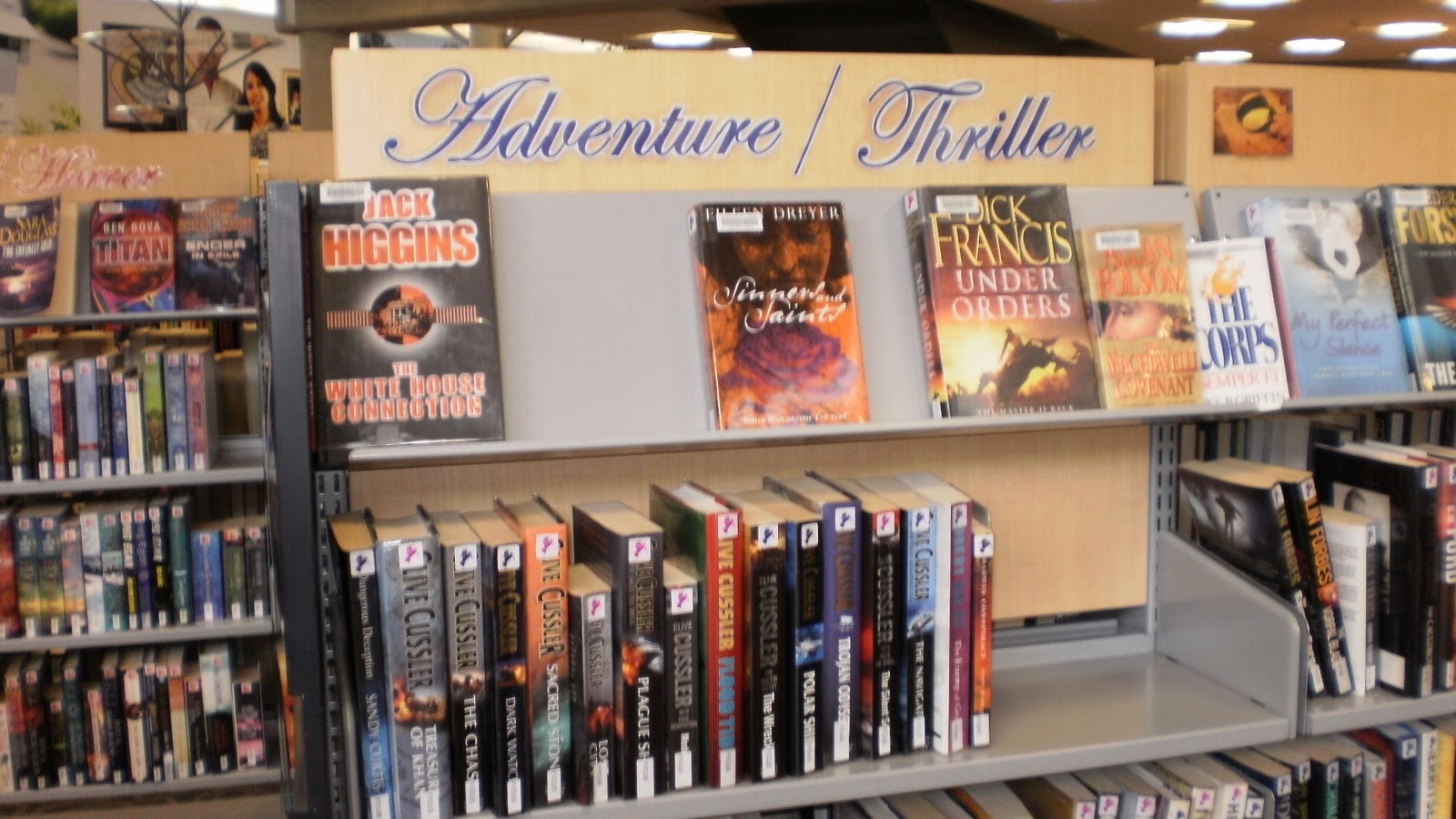
About five years ago, in response to some feedback from our customers, we divided the fiction collection at Ingleburn into Genres. The reasoning was that people usually like to read the same kinds of books, for example mysteries or romances. By grouping all the same kind of fiction together, we wanted to make it easier for our customers to find their favourite kind of books, and also to help them locate other authors who write in the same genre. At the same time, we kept a General Fiction section, for books that are hard to categorise, or which straddle two or more genres.

The change was one of the most popular things we ever did to the collection, based on the feedback we recieved. Of course, there are some customers who preferred the old arrangement. But frankly we were surprised by how much positive feedback we got! It was very satisfying - we like happy customers!

Over time we've made a few tweaks to the fiction genres. This year we've made a couple of major changes, adding the Classics and Chick Lit genres. We've wanted to add a Classics section for a long time, and a big donation of classics at the end of last year allowed us to form a basis for this collection. And the Chick Lit collection is a response to trends in popular fiction, and is proving to be one of our most popular genres.

Have you checked out the Readers Lounge  at the main Campbelltown Library website? There are some great links there for avid readers, where you can find information on new authors in your favourite genre, best seller lists, which books come in which order in series and the book version of your favourite film. It's worth checking out.

Thursday, October 14, 2010

How do the Zones work?

People have been asking about our non-fiction Zones. The idea behind the zones is to group recreational or popular non-fiction together in one area, rather than have it spread out in different areas of the library. For example, the Children and Parenting Zone has materials in it from the 150, 300 and 600 Dewey classifications. Traditionally, these items would have been spread out around the library building - the Zones are an attempt to bring them all together.

More academic, or "study" materials are still in their traditional Dewey number order, in the main non-fiction section of the library.

Many libraries are trying different ways of organising their collections these days, to try to meet the changing needs of our customers. The Dewey classification system can be confusing for many people, and while it works well for academic libraries it doesn't always work for a modern public library. Hopefully the Zones allow people to sit and browse through all the books and magazines in the area they are interested in. And they have a great view of the park!

At present our Zones are: Technology, which includes computers and machines of all kinds; Arts, Crafts and Hobbies, which is pretty much as it sounds; Body, Mind and Spirit, including self-help, exercise and matters spiritual; Children and Parenting; Travel, and lastly, Biographies.


What do you think of our Zones? Do you like them? Hate them? Didn't know they existed? Let us know in comments.

Wednesday, September 29, 2010

School Holiday Activities

It's an Alien Invasion!


Ready to blast off!

More than 50 kids descended upon the library for a morning of space crafts today. With a space collage, alien masks and rockets to make there was plenty to keep them occupied. As usual it was organised chaos for the staff, with our regular preschool storytime going on simultaneously! But it's well worth the effort to see the kids enjoying themselves at the library. They always surprise us with their creative interpretations of the crafts. It's a good opportunity for the whole family to visit the library, have some fun and do something different during the holidays.

Space Kittens?


Wednesday, September 22, 2010

Book Review - The Patron Saint of Eels by Gregory Day.


The Patron Saint of Eels is Gregory Day's debut novel.

It is set in the coastal town of Mangowak.

It is a book about eels stuck in a ditch.

The Patron Saint of Eels is Australian bush magical realism. With property developers smashing up the town, tourism sadly blossoming and the locals observing Council workers installing road signs about road signs, the people take to the pub to play pool and drink beers. That mad thrashing sound of the eels stuck in a ditch can't help but be analogous to local lives lived within the insularity of a small town, awaiting liberation - or death.

Grim it seems, but Day takes a look around him and finds nature to be the redemptive motif amongst a seemingly boring, meaningless existence. The characters themselves are, by their linked histories, warm and funny. Day's empathy for his regional dwelling cast really makes you consider this livelihood as one of the few remaining possibilities of a community. A community aware of each others vulnerabilities but all too prepared to overlook, or at least ridicule these shortcomings with outback backslapping and shouts all 'round.

The eels provide a lot of splashing in the early parts of the novel. It's unpleasant thinking about these trapped slimy beasts and Day uses their noise accompaniment to increase the anxiety of the reader and the protagonist alike. It's about here that Day asks you to believe him and he himself, as the story moves from a Country yarn to an International, interstellar leap of faith.

The Patron Saint of Eels wears a beanie, smokes cigarettes and loves chocolate. Fra Ionio takes over the novel as the central storyteller and tells us of his previous 300 or so years of eel handling and how he came to be in Mangowak and address the trapped Eels with basically a song and a prayer.

Whether or not you believe Fra Ionio will determine the success of the book, but I, like Day, am all too happy to open myself to the endless possibilities and sometimes miracles of the natural and imagined World.
An excellent debut with good ears for the sound of rural Australia.

Reviewed by: what

The Patron Saint of Eels is available for loan or reserve at Ingleburn Library.